Ballistic Testing versus Shooting and Hoping
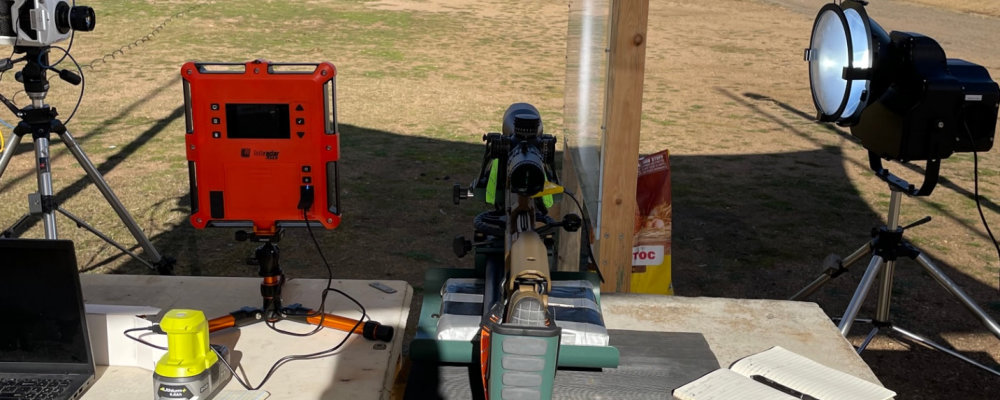
In small-arms training and range design, relying on ad hoc live fire — “shooting and hoping” — is inherently risky and epistemically unsound. Without controlled, repeatable testing, one cannot reliably know how ammunition will interact with different materials or whether a target/back-stop will contain or redirect fragments safely.
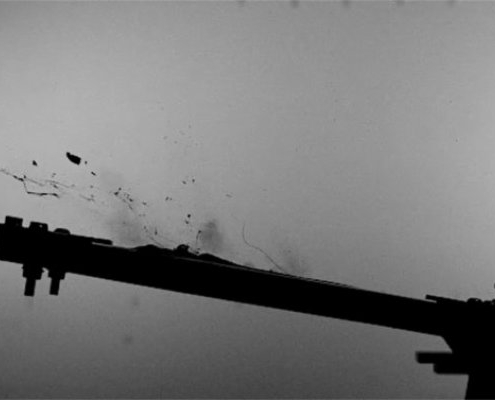
By contrast, ballistic testing subjects weapons, ammunition, and target materials to systematic, repeatable experiments under defined conditions. This approach enables verification of performance criteria—such as whether a given backstop material consistently prevents ricochet or fragmentation across shot type, velocity, and angle. For example, a large-scale experimental study produced 297 ricochet marks on concrete from five bullet types across two distances, revealing wide variability in impact-mark morphology even under controlled conditions. Meanwhile, other work has recorded thermal energy and fragmentation patterns when projectiles ricochet off steel, concrete, or granite — demonstrating secondary hazards such as fragments or heat that cannot be predicted without testing.
Moreover, the scientific principle of defining criteria before testing (i.e. “to know X, one must first define what counts as acceptable performance”) is central to engineering practice. Without upfront specification — what constitutes safe containment, acceptable fragment ricochet angles, or tolerable splash energy — shooting becomes a gamble. Controlled ballistic testing transforms guesswork into evidence-based engineering, enabling range designers and users to select materials and layouts based on data rather than assumption.
In short: ballistic testing is indispensable if safety, repeatability, and verifiable performance matter. “Shooting and hoping” has no place where lives and legal accountability hinge on predictable behaviour.
- Eren, Metin I., Jay Romans, Robert S. Walker, Briggs Buchanan, and Alastair Key. 2024. “Bullet Ricochet Mark Plan-View Morphology in Concrete: An Experimental Assessment of Five Bullet Types and Two Distances Using Machine Learning.” Forensic Sciences Research 9, no. 1 (December 29, 2023).
- J. M. Jasiński et al. 2024. “Thermal Energy Analysis of Projectiles during Ricochetting Using a Thermal Camera.” Materials 15, no. 13.
- Kunz, S., S. Kirchhoff, R. Eggersmann, D. Stiefel, M. Gessinger, A. Manthei, S. Eichner, M. Graw, and O. Peschel. 2013. “Ricocheted Rifle and Shotgun Projectiles: A Ballistic Evaluation.” Journal of the Technical Examination 42 (2).
- McNeil, P., W. Thompson, L. Li, et al. 2023. “Bullet Ricochet Mark Plan-View Morphology in Concrete: An Experimental Assessment of Five Bullet Types and Two Distances.” Forensic Sciences Research 9 (1).

 https://www.ballistex.com.au/wp-content/uploads/2026/01/Anything-can-cause-ricochet-2.jpg
400
600
admin
https://www.ballistex.com.au/wp-content/uploads/2026/01/Ballistex-Logo.png
admin2026-01-04 22:20:252026-01-06 23:01:37Anything Can Cause Ricochet: Understanding Ballistic Behaviour Across Materials
https://www.ballistex.com.au/wp-content/uploads/2026/01/Anything-can-cause-ricochet-2.jpg
400
600
admin
https://www.ballistex.com.au/wp-content/uploads/2026/01/Ballistex-Logo.png
admin2026-01-04 22:20:252026-01-06 23:01:37Anything Can Cause Ricochet: Understanding Ballistic Behaviour Across Materials https://www.ballistex.com.au/wp-content/uploads/2026/01/Ballistic-Dangers-2.jpg
400
600
admin
https://www.ballistex.com.au/wp-content/uploads/2026/01/Ballistex-Logo.png
admin2026-01-04 22:18:202026-01-06 23:03:13Ballistic Dangers from Steel Fabrication
https://www.ballistex.com.au/wp-content/uploads/2026/01/Ballistic-Dangers-2.jpg
400
600
admin
https://www.ballistex.com.au/wp-content/uploads/2026/01/Ballistex-Logo.png
admin2026-01-04 22:18:202026-01-06 23:03:13Ballistic Dangers from Steel Fabrication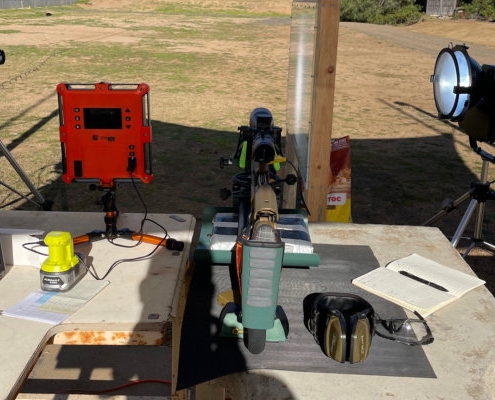 https://www.ballistex.com.au/wp-content/uploads/2026/01/Ballistic-Testing-2.jpg
400
600
admin
https://www.ballistex.com.au/wp-content/uploads/2026/01/Ballistex-Logo.png
admin2026-01-04 22:16:142026-01-06 23:04:35Ballistic Testing versus Shooting and Hoping
https://www.ballistex.com.au/wp-content/uploads/2026/01/Ballistic-Testing-2.jpg
400
600
admin
https://www.ballistex.com.au/wp-content/uploads/2026/01/Ballistex-Logo.png
admin2026-01-04 22:16:142026-01-06 23:04:35Ballistic Testing versus Shooting and Hoping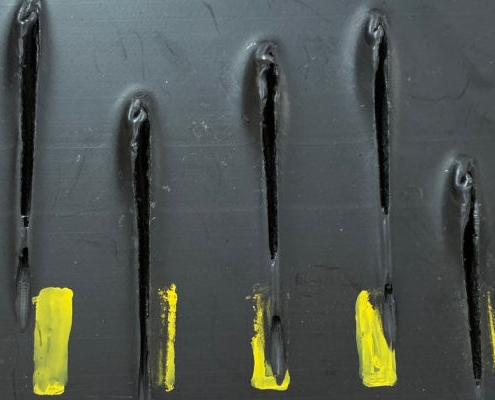 https://www.ballistex.com.au/wp-content/uploads/2026/01/Bending-Bullets-2.jpg
400
600
admin
https://www.ballistex.com.au/wp-content/uploads/2026/01/Ballistex-Logo.png
admin2026-01-04 22:11:542026-01-06 23:09:56Bending Bullets
https://www.ballistex.com.au/wp-content/uploads/2026/01/Bending-Bullets-2.jpg
400
600
admin
https://www.ballistex.com.au/wp-content/uploads/2026/01/Ballistex-Logo.png
admin2026-01-04 22:11:542026-01-06 23:09:56Bending Bullets https://www.ballistex.com.au/wp-content/uploads/2026/01/Advantages-of-Engineered-2.jpg
400
600
admin
https://www.ballistex.com.au/wp-content/uploads/2026/01/Ballistex-Logo.png
admin2026-01-04 22:05:542026-01-06 23:06:19Advantages of Engineered Targets and Range Systems
https://www.ballistex.com.au/wp-content/uploads/2026/01/Advantages-of-Engineered-2.jpg
400
600
admin
https://www.ballistex.com.au/wp-content/uploads/2026/01/Ballistex-Logo.png
admin2026-01-04 22:05:542026-01-06 23:06:19Advantages of Engineered Targets and Range Systems

