Anything Can Cause Ricochet: Understanding Ballistic Behaviour Across Materials
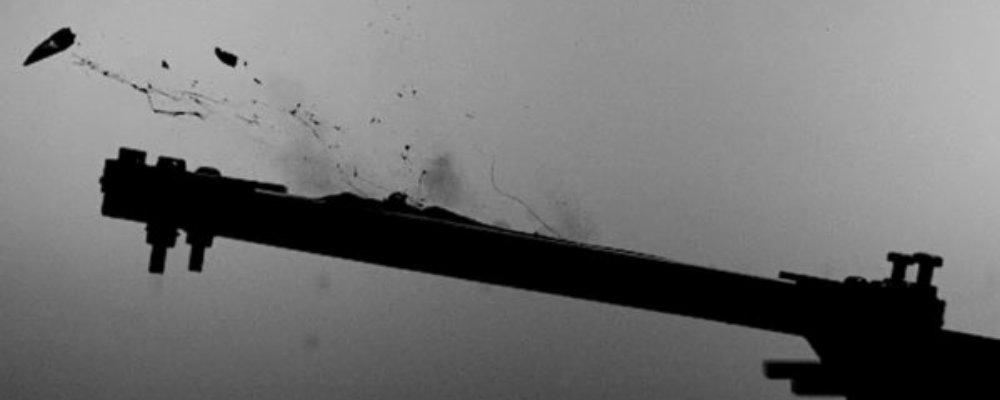
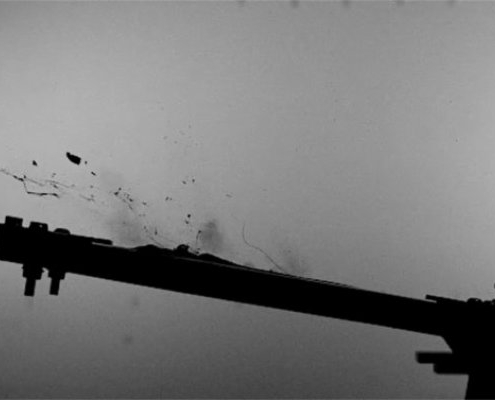
Ricochet is one of the most unpredictable and hazardous outcomes in small-arms environments, and ballistic testing consistently demonstrates that almost any material can cause a projectile to deflect, fragment, or rebound under the right conditions. Factors such as bullet construction, velocity, angle of impact, and the physical properties of the target material interact in complex ways, making ricochet possible even with surfaces that appear soft, porous, or easily penetrated.
Ballistic research shows that traditional “hard” materials such as steel, concrete, and stone readily produce ricochets, often sending fragments or whole rounds off at unexpected angles. However, testing also reveals that relatively “soft” materials—including wood, soil, and certain plastics—can cause deflection when bullets strike at shallow angles or after the projectile yaws or deforms. Even materials that allow penetration can briefly destabilize a bullet, altering its trajectory as it exits.
Intermediate barriers—glass, drywall, metal sheeting, fabrics, and vegetation—add further unpredictability. A bullet may fragment, tumble, or deflect after passing through them, creating ricochet-like secondary trajectories. This phenomenon highlights why no material should ever be assumed “safe” or “ricochet-free.”
Ultimately, understanding ricochet requires not just material knowledge but realistic testing and conservative safety planning. The guiding principle is clear: if it can be struck by a bullet, it can cause a ricochet.
- Nishshanka, B., C. Shepherd, P. Paranitharan, and D. Paranirubasingam. 2022. “An Empirical Study on the Close-Range Post-Ricochet Orientation of AK Bullets (7.62 mm × 39 mm).” Science & Justice 62 (5): 569–581.
- Becerra, F., A. Silva, and J. Martínez. 2020. “Forensic Based Empirical Study on Ricochet Behaviour of Kalashnikov Bullets (7.62 mm × 39 mm) on 1 mm Sheet Metal.” Forensic Science International 317: 110543.
- Viano, D. C., and J. J. Kleiven. 2015. “An Empirical Study on the Relation between the Critical Angle for Bullet Ricochet and the Properties of Wood.” Journal of Forensic Sciences 60 (6): 1492–1500.
- Müller, T., and R. Schmidt. 2025. “Ricochet of 9-mm Luger Bullets off Plywood, MDF, and Melamine Board: An Empirical Investigation.” Journal of Ballistics Research 12 (1): 45–59.
- Schönborn, W., P. Schmelzer, and M. Keil. 2023. “Bullet Ricochet Mark Plan-View Morphology in Concrete: An Experimental Assessment of Five Bullet Types and Two Distances.” Forensic Science Review 9 (1):owad051/7503845

 https://www.ballistex.com.au/wp-content/uploads/2026/01/Anything-can-cause-ricochet-2.jpg
400
600
admin
https://www.ballistex.com.au/wp-content/uploads/2026/01/Ballistex-Logo.png
admin2026-01-04 22:20:252026-01-06 23:01:37Anything Can Cause Ricochet: Understanding Ballistic Behaviour Across Materials
https://www.ballistex.com.au/wp-content/uploads/2026/01/Anything-can-cause-ricochet-2.jpg
400
600
admin
https://www.ballistex.com.au/wp-content/uploads/2026/01/Ballistex-Logo.png
admin2026-01-04 22:20:252026-01-06 23:01:37Anything Can Cause Ricochet: Understanding Ballistic Behaviour Across Materials https://www.ballistex.com.au/wp-content/uploads/2026/01/Ballistic-Dangers-2.jpg
400
600
admin
https://www.ballistex.com.au/wp-content/uploads/2026/01/Ballistex-Logo.png
admin2026-01-04 22:18:202026-01-06 23:03:13Ballistic Dangers from Steel Fabrication
https://www.ballistex.com.au/wp-content/uploads/2026/01/Ballistic-Dangers-2.jpg
400
600
admin
https://www.ballistex.com.au/wp-content/uploads/2026/01/Ballistex-Logo.png
admin2026-01-04 22:18:202026-01-06 23:03:13Ballistic Dangers from Steel Fabrication https://www.ballistex.com.au/wp-content/uploads/2026/01/Ballistic-Testing-2.jpg
400
600
admin
https://www.ballistex.com.au/wp-content/uploads/2026/01/Ballistex-Logo.png
admin2026-01-04 22:16:142026-01-06 23:04:35Ballistic Testing versus Shooting and Hoping
https://www.ballistex.com.au/wp-content/uploads/2026/01/Ballistic-Testing-2.jpg
400
600
admin
https://www.ballistex.com.au/wp-content/uploads/2026/01/Ballistex-Logo.png
admin2026-01-04 22:16:142026-01-06 23:04:35Ballistic Testing versus Shooting and Hoping https://www.ballistex.com.au/wp-content/uploads/2026/01/Bending-Bullets-2.jpg
400
600
admin
https://www.ballistex.com.au/wp-content/uploads/2026/01/Ballistex-Logo.png
admin2026-01-04 22:11:542026-01-06 23:09:56Bending Bullets
https://www.ballistex.com.au/wp-content/uploads/2026/01/Bending-Bullets-2.jpg
400
600
admin
https://www.ballistex.com.au/wp-content/uploads/2026/01/Ballistex-Logo.png
admin2026-01-04 22:11:542026-01-06 23:09:56Bending Bullets https://www.ballistex.com.au/wp-content/uploads/2026/01/Advantages-of-Engineered-2.jpg
400
600
admin
https://www.ballistex.com.au/wp-content/uploads/2026/01/Ballistex-Logo.png
admin2026-01-04 22:05:542026-01-06 23:06:19Advantages of Engineered Targets and Range Systems
https://www.ballistex.com.au/wp-content/uploads/2026/01/Advantages-of-Engineered-2.jpg
400
600
admin
https://www.ballistex.com.au/wp-content/uploads/2026/01/Ballistex-Logo.png
admin2026-01-04 22:05:542026-01-06 23:06:19Advantages of Engineered Targets and Range Systems
